
How much slower is that?
Light travels at 299,792 km per second, which is about 1,079,252,849 km/h. Slowing it to 100 km/h makes it roughly 10.8 million times slower. Suddenly light is slower than a car on the motorway, and two famous ideas from physics, the finite speed of light and Einstein's relativity, stop being invisible.
We'll follow the approach of physicist George Gamow, who in 1940 imagined a world with a very slow speed of light to make relativity visible (in his books about "Mr Tompkins").
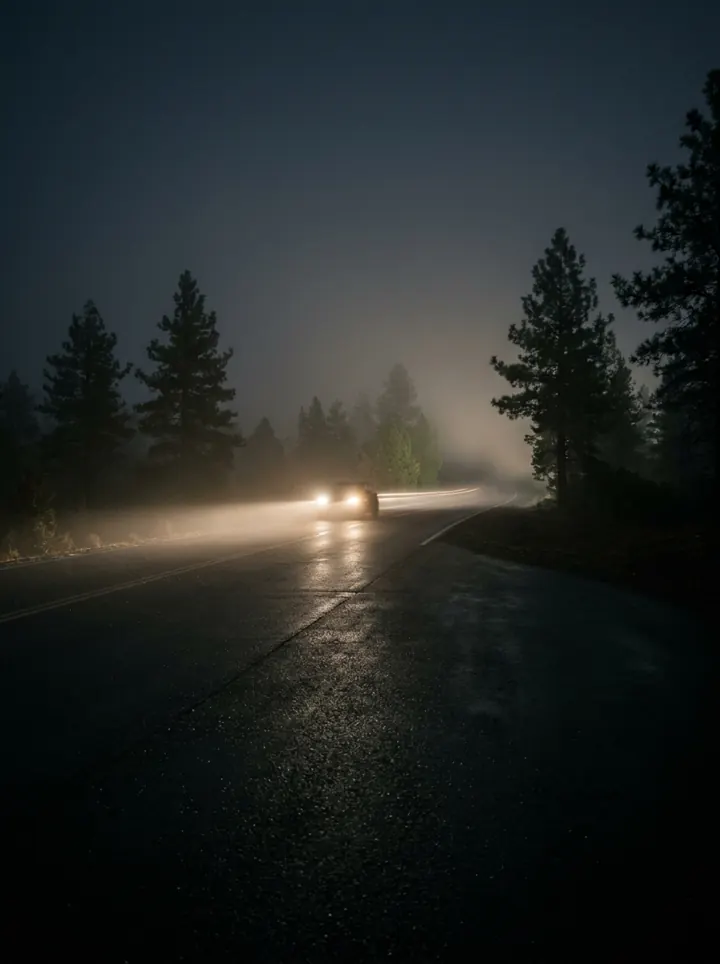
Seeing the past
Everything you see is light that left an object a little while ago. Today that delay is billionths of a second. At 100 km/h, it becomes very noticeable.
- Across a room: 0.36 s. A friend waving from across the room would wave about a third of a second before you see it.
- Across a street: 3.6 s. A car you see "approaching" may already be much closer than it looks.
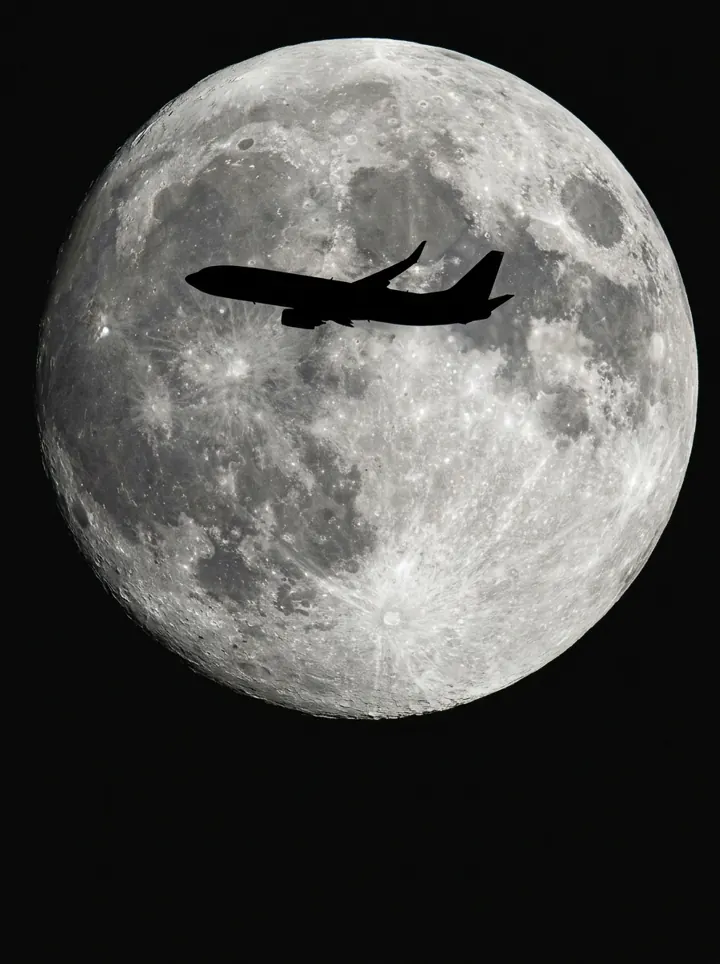
- Moonlight: 160 days. At 384,400 km, the Moon you see tonight would be how it looked about five months ago.
- Sunlight: 171 years. The sunlight warming you today would have left the Sun in the 1850s.
Colours that change as you move
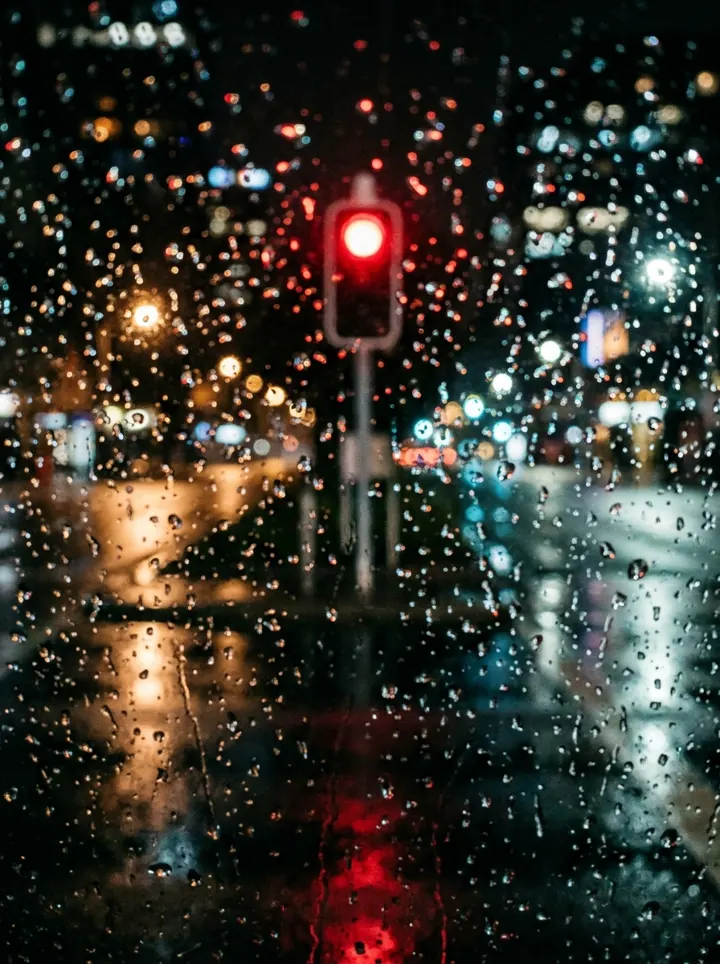
When you move towards a light source, its waves bunch up and look bluer; moving away stretches them redder. This Doppler effect is normally tiny for everyday speeds. But at half the speed of light (50 km/h in our world), the relativistic Doppler factor is about 1.7: red light at 700 nm ahead of you would arrive at around 400 nm, at the violet end of the spectrum. Traffic lights would need a rethink.
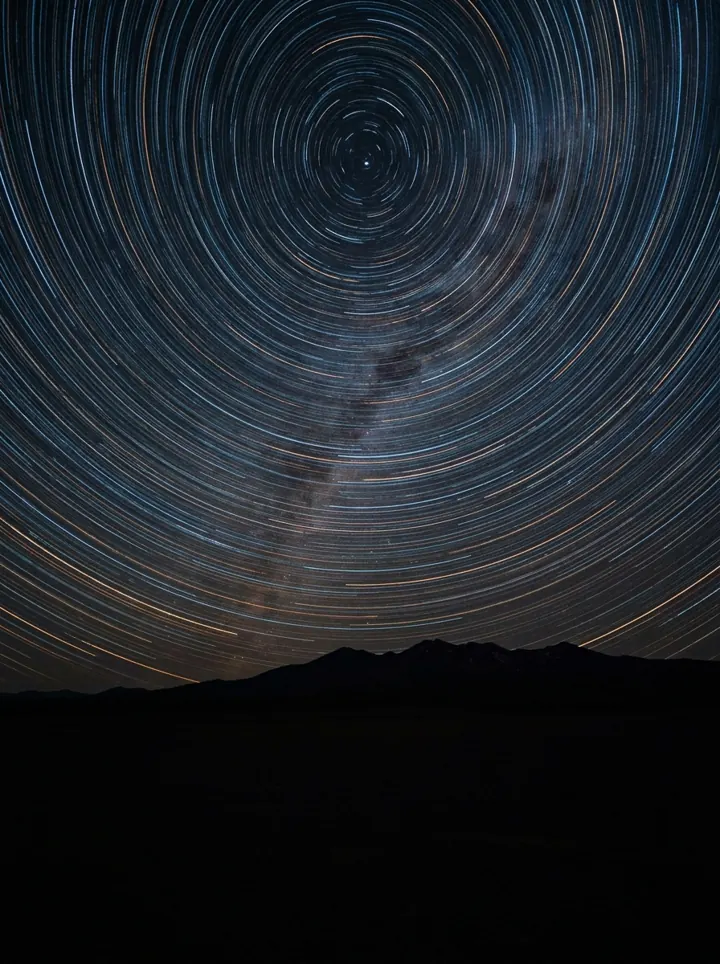
Speeding becomes time travel
Einstein's special relativity says moving clocks tick slower, by the factor γ = 1/√(1 − v²/c²). Today that's only measurable with atomic clocks on planes and satellites. With c = 100 km/h:
- At 50 km/h, your clock runs at about 87% of the speed of someone standing still.
- At 90 km/h, it runs at about 44%. A two-hour drive would age you less than one hour compared to people at home.
Objects in motion would also appear distorted, and nothing could ever reach 100 km/h. That would be the universal speed limit.
No phones, no internet, no GPS
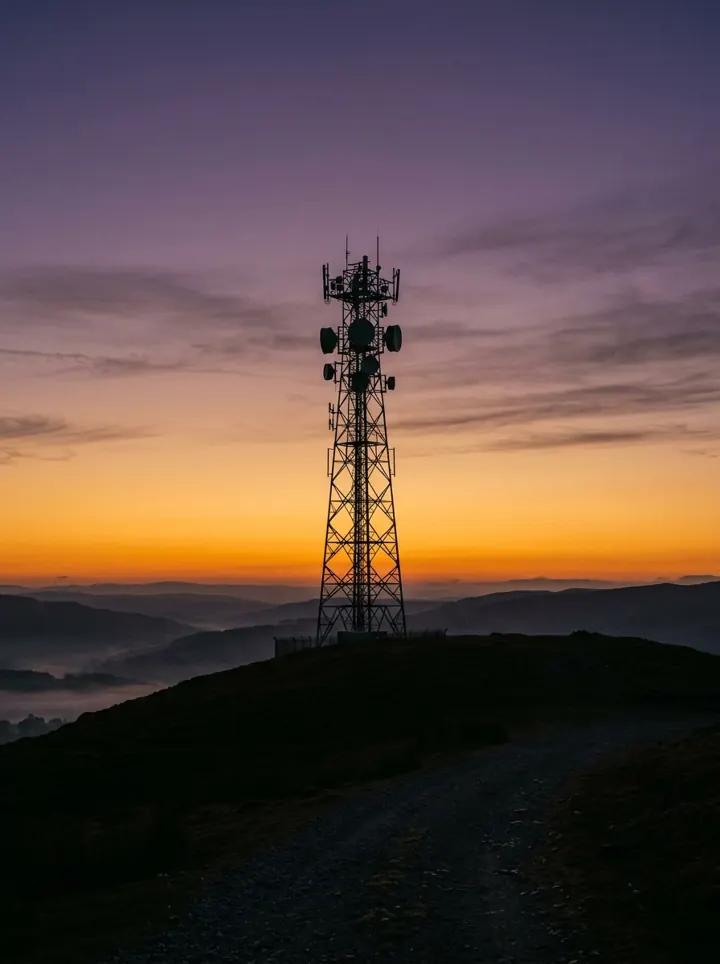
Radio, Wi-Fi, mobile networks and fibre-optic cables all carry information at (or near) the speed of light. A phone call to someone 10 km away would take 6 minutes each way. The internet, GPS and live TV as we know them couldn't work. Society would run on much slower, much more local communication.
The fine print: chemistry would break
In reality, the speed of light isn't an isolated setting. It's woven into the constants that hold atoms together (such as the fine-structure constant). Change it this drastically and atoms, chemistry and life as we know them couldn't exist. That's why physicists use slow-light worlds as thought experiments: they're perfect for building intuition about relativity, even if the universe itself couldn't work that way.
FAQ
What is the actual speed of light?
Exactly 299,792,458 metres per second in a vacuum, about 1.08 billion km/h. It's fixed by definition in the SI system.
How long does sunlight take to reach Earth today?
About 8 minutes and 20 seconds, since the Sun is about 150 million km away.
What is time dilation?
An effect predicted by Einstein's special relativity: clocks moving relative to you tick more slowly. It's measured every day in GPS satellites, whose clocks must be corrected for it.
Who imagined a world with slow light?
Physicist George Gamow, in his 1940 book 'Mr Tompkins in Wonderland', to make relativity easy to picture.
Sources & further reading
- BIPM: SI definition of the metre (c = 299,792,458 m/s).
- Einstein, A. (1905). On the electrodynamics of moving bodies. Annalen der Physik (time dilation, γ factor).
- Gamow, G. (1940). Mr Tompkins in Wonderland. Cambridge University Press.
- NASA: Sun Fact Sheet (mean distance ~149.6 million km).
- Relativistic Doppler effect, f' = f·√((1+β)/(1−β)): standard physics references.
This is a hypothetical scenario explained with real science. Numbers are rounded for clarity. Images are AI-generated illustrations of real phenomena. Spotted an error? Tell us and we'll fix it.