
The rule: 10% less, every second
Today, Earth pulls on you with an acceleration of 9.81 m/s². In our scenario, that number gets multiplied by 0.9 every second. It sounds gentle, but repeated shrinking adds up fast: after 7 seconds gravity is halved, after 22 seconds it's at 10%, and after 44 seconds it's at 1%.
We'll assume only Earth's own pull weakens. The Sun still holds Earth in its orbit, and the planet's rocks still hold together (for now).

Second by second
Here's how a few seconds turn into the end of the world as we know it.
- You're 10% lighter. Stairs feel easier and jumps go a little higher. Nothing else seems wrong.
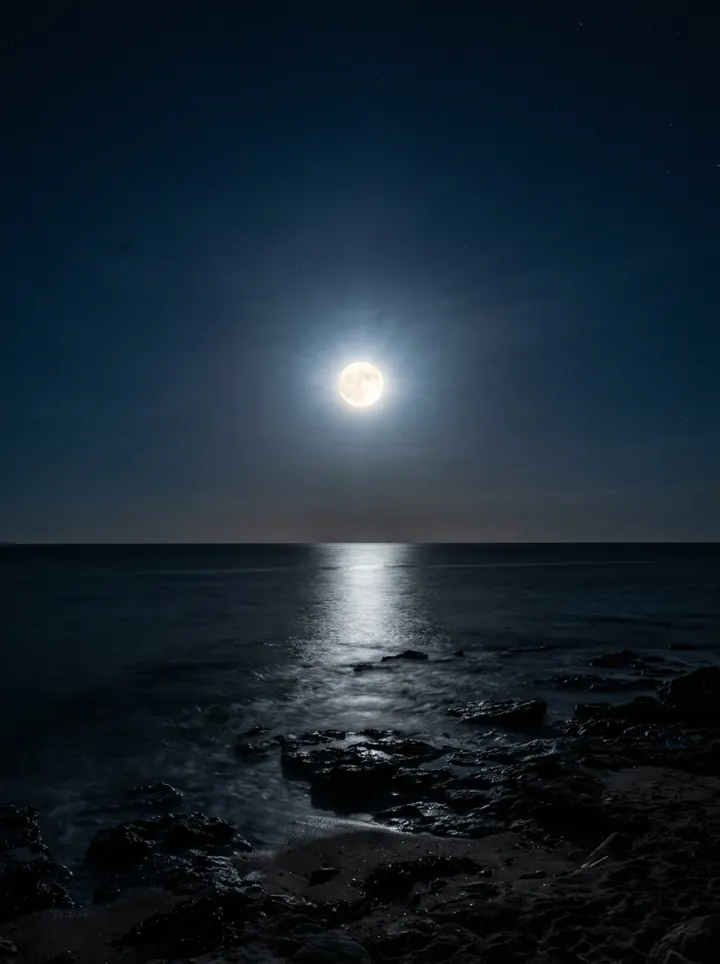
- The Moon escapes. For a circular orbit, escape speed is exactly √2 times orbital speed. When Earth's pull halves, the Moon's existing speed (about 1 km/s) becomes escape speed, so it drifts away for good. So does the International Space Station.
- The air thins out. Air pressure is the weight of the air above you, so it falls with gravity. At 10%, sea-level pressure is about 10 kPa, lower than the summit of Everest (about 33 kPa). Breathing becomes impossible.
- The Armstrong limit. Below about 6.3 kPa, water boils at body temperature (37 °C). Exposed body fluids, like saliva and the moisture in your lungs, would boil.
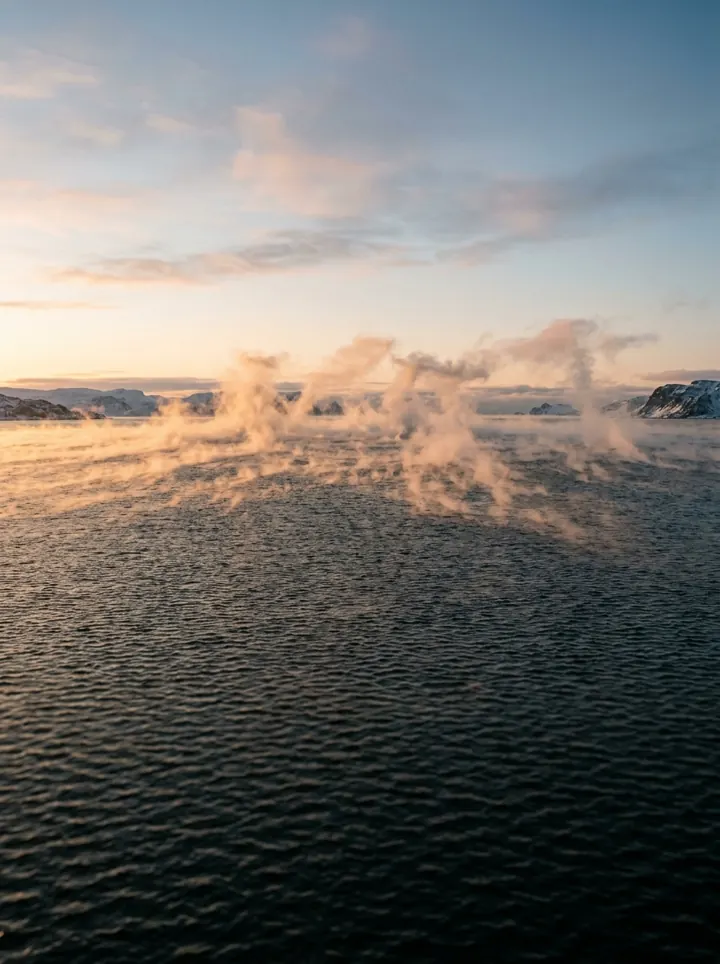
- The oceans boil. At 1% gravity the pressure is about 1 kPa, where water boils at roughly 7 °C. Most of the ocean surface is warmer than that, so the seas start to steam violently.
- The sky leaks away. Earth's escape speed (normally 11.2 km/s) falls to about 500 m/s, roughly the speed of air molecules. The atmosphere starts escaping into space.
- One jump is enough. Escape speed drops to around 3 m/s, about how fast you leave the ground in a normal jump. Jump, and you never come back down.
Why the Moon goes first
Orbits are a balance between speed and gravity. The Moon travels at about 1 km/s, exactly right to circle Earth at today's strength. Physics says that to escape, an object needs √2 (about 1.41) times its circular orbital speed. When gravity halves, the escape speed shrinks by the same √2 factor, so the Moon's current speed becomes escape speed. No push needed; it simply stops being held.
Without the Moon, tides would drop to the much smaller ones caused by the Sun. That's the least of our problems by this point.
Why the air and oceans go next
The air pressing on you is literally the weight of the atmosphere above you. Weaken gravity and that weight shrinks, so pressure falls almost immediately. Water's boiling point depends on pressure: on Everest it boils at about 70 °C, and at 1% of today's pressure it boils at around 7 °C. That's why the oceans would start boiling at room temperature, without any added heat.
Then comes the slow leak. Air molecules zip around at hundreds of metres per second. Normally that's nowhere near Earth's 11.2 km/s escape speed, but once escape speed falls to the same few hundred m/s, the atmosphere bleeds away into space.
What happens to Earth itself?
Earth's interior is squeezed by its own gravity, with pressures of hundreds of gigapascals in the core. Remove that squeeze and the rock would start to decompress and expand, which would likely trigger enormous earthquakes and volcanic activity. Rock is strong, though, so the planet wouldn't simply fly apart at once. Exactly how it would deform is beyond what we can calculate here, so treat this part as an educated guess.
Could gravity really weaken?
No. Earth's gravity depends on its mass, and that barely changes. Earth gains roughly 40,000 tonnes of space dust a year and loses a little hydrogen and helium to space, both tiny compared to its 6 × 10²¹ tonnes. The gravitational constant itself has been measured to be stable to extreme precision. Gravity is one of the most reliable things in the universe, which is exactly why this thought experiment is so unsettling.
FAQ
How fast would the Moon leave if gravity halved?
It would leave immediately on an escape path, moving at its current ~1 km/s. It would drift away over days and weeks and end up orbiting the Sun near Earth.
What is the Armstrong limit?
The pressure (about 6.3 kPa) below which water boils at normal body temperature, 37 °C. It's around 18–19 km altitude on today's Earth.
Why would the oceans boil without heat?
Boiling depends on pressure. Lower pressure means a lower boiling point. At 1 kPa, water boils at roughly 7 °C, colder than most of the ocean surface.
Could you survive by staying indoors?
Only in a fully sealed, pressurised building, and not for long. Once the atmosphere and oceans start escaping, Earth's surface becomes like the Moon's.
Sources & further reading
- NASA: Earth Fact Sheet (surface gravity 9.81 m/s², escape velocity 11.19 km/s).
- NASA: Moon Fact Sheet (mean orbital velocity ~1.02 km/s).
- Armstrong limit (~6.3 kPa, water boils at 37 °C): standard aerospace physiology references.
- Water vapour pressure tables (saturation pressure ~1 kPa at ~7 °C).
- Classical mechanics: escape velocity v = √(2GM/r) = √2 × circular orbital velocity.
This is a hypothetical scenario explained with real science. Numbers are rounded for clarity. Images are AI-generated illustrations of real phenomena. Spotted an error? Tell us and we'll fix it.