
How much energy does one AI answer use?
Less than most people think. In 2025, Google published measurements showing that a median text prompt to its Gemini assistant used about 0.24 watt-hours of electricity. That's roughly the same as watching TV for under nine seconds. Image and video generation, and long reasoning tasks, use considerably more.
The problem isn't one question. It's billions of them, every day, plus the enormous energy needed to train new models.

The real numbers
The International Energy Agency's (IEA) Energy and AI report gives the clearest picture:
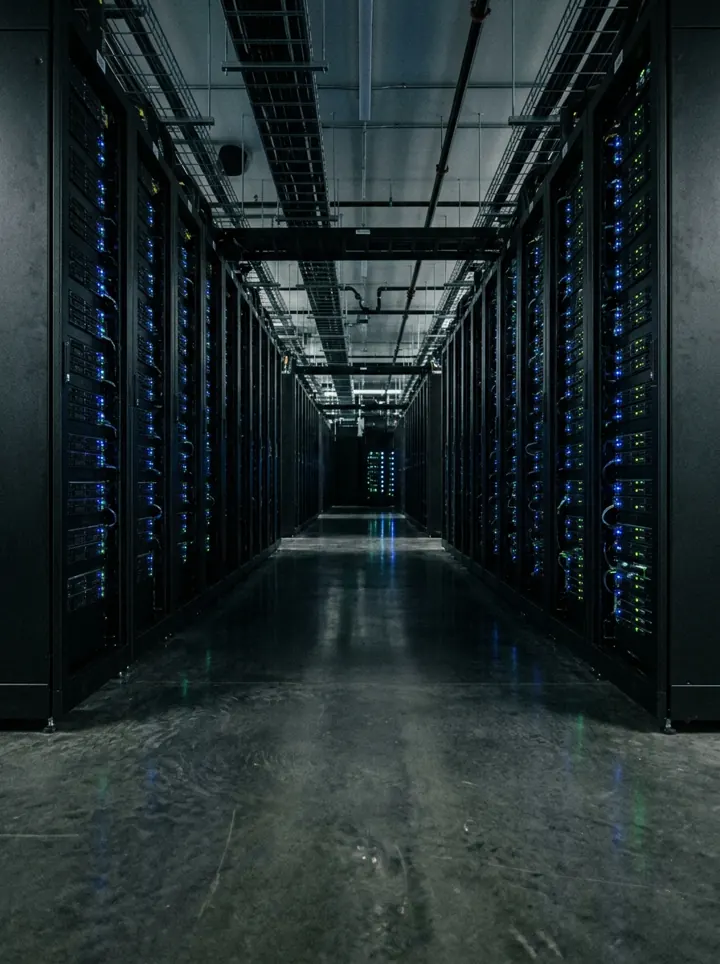
- ~415 TWh. All data centres (AI and everything else) used about 1.5% of global electricity. Nearly half was in the US, about a quarter in China and 15% in Europe.
- ~945 TWh. In the IEA's base case, data-centre demand roughly doubles, driven mainly by AI-accelerated servers, reaching just under 3% of global electricity: slightly more than Japan uses today.
- Nuclear deals. Microsoft, Google and Amazon have all signed agreements involving nuclear power (from restarting an existing plant to funding small modular reactors) to secure round-the-clock electricity.
What if AI took ALL of it?
The world uses roughly 30,000 TWh of electricity per year. For AI to consume all of it, data-centre demand would have to grow about 70-fold from today. Long before that, three things would stop it:
- Physical limits. Power plants, grid connections and transformers take years to build. Many regions already have waiting lists for data-centre grid connections.
- Price. Electricity prices would soar, making AI far more expensive to run.
- Politics. No government would let hospitals, homes and factories go dark for chatbots.

The real race
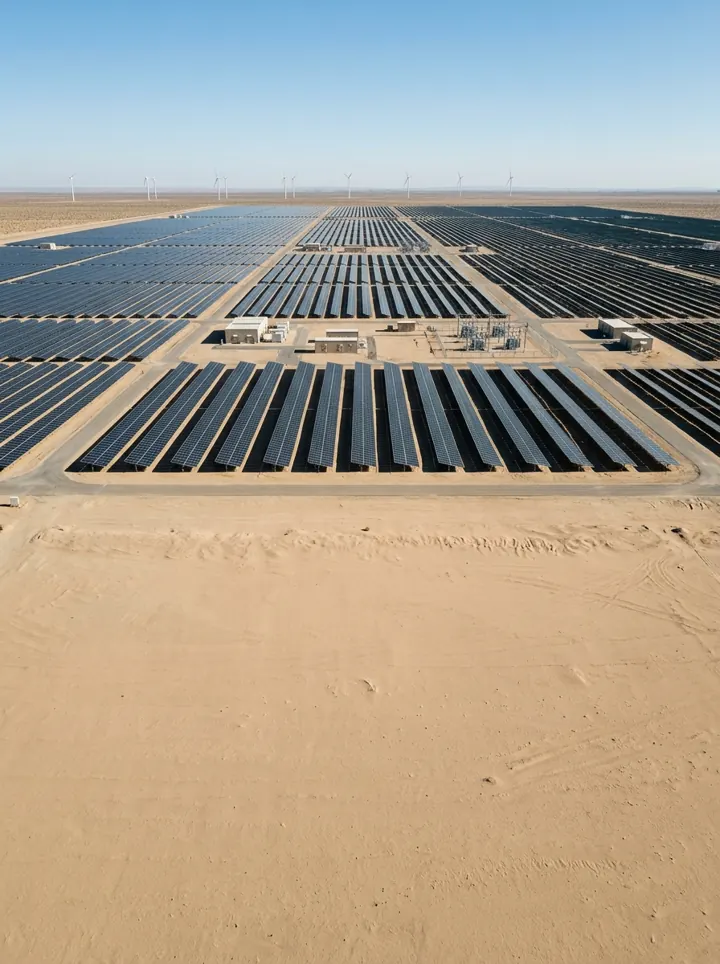
The honest version of this question is: can clean electricity be built fast enough to power AI without raising emissions and energy bills? Solar, wind, storage, nuclear and grid upgrades are all being expanded, but local pressure is real. In some areas, data centres already use a large share of local electricity, and communities are debating who pays for new power lines.
Figures as of November 2026, from the IEA's latest published analysis.
FAQ
How much electricity does ChatGPT or Gemini use per question?
Google reported about 0.24 Wh for a median Gemini text prompt in 2025. Figures vary by model and task; image, video and long reasoning tasks use more.
How much electricity do data centres use?
About 415 TWh in 2024 according to the IEA, roughly 1.5% of global electricity consumption.
Will AI's electricity use keep growing?
The IEA's base case projects data-centre demand to roughly double to about 945 TWh by 2030, with AI the main driver.
Why are tech companies investing in nuclear power?
Data centres need reliable power 24 hours a day. Nuclear provides steady, low-carbon electricity, so several tech companies have signed long-term nuclear agreements.
Sources & further reading
- International Energy Agency (2025). Energy and AI: World Energy Outlook Special Report.
- IEA: Energy demand from AI (415 TWh in 2024; ~945 TWh projected for 2030).
- Google (2025). Measuring the environmental impact of AI inference (median Gemini text prompt ≈ 0.24 Wh).
- Carbon Brief: AI: five charts that put data-centre energy use and emissions into context.
- Our World in Data: How much energy do data centers and artificial intelligence use?
This is a hypothetical scenario explained with real science. Numbers are rounded for clarity. Images are AI-generated illustrations of real phenomena. Spotted an error? Tell us and we'll fix it.