
The maths: a third of your life, back
Health organisations recommend that adults sleep at least 7 hours a night, and many people get around 8. Eight hours is a third of every day, which adds up to 2,920 hours a year, or about 122 days. Across a life of roughly 79 years, that's about 26 years spent asleep.
In our scenario, you simply stop needing it. You never feel tired, and your body stays healthy. What happens next?

From the first night to the first month
The change would feel very different depending on whether only you stop sleeping, or everyone does.
- Night one: boredom. If only you stop sleeping, you have eight quiet hours, but shops are closed and friends are offline. People who work night shifts know this feeling well.
- Week one: a 24-hour world. If everyone stops sleeping, demand appears around the clock. Shops, gyms, schools and offices extend into the night, and "night shift" stops being special.
- Month one: 240 extra hours. That's roughly a third of the 600–750 classroom hours the US Foreign Service Institute estimates for an English speaker to reach working proficiency in Spanish.
- Year one: everything shifts. Electricity use at night jumps, cities stay lit, and the idea of "the weekend" might fade as time stops being scarce.
The catch: what sleep actually does
Sleep isn't just switching off. Research over the last two decades shows it's when the brain does essential maintenance:
- Cleaning. In 2013, scientists found that the brain's waste-clearing system (the glymphatic system) works much faster during sleep, flushing out by-products such as beta-amyloid.
- Memory. Sleep helps consolidate what you learned during the day, turning short-term experiences into longer-term memories.
- Body repair. Sleep supports the immune system and regulates hormones linked to appetite, growth and stress.
So for this scenario to work, your body would need to do all of that while you're awake. Without that, the extra time would come at a terrible cost.
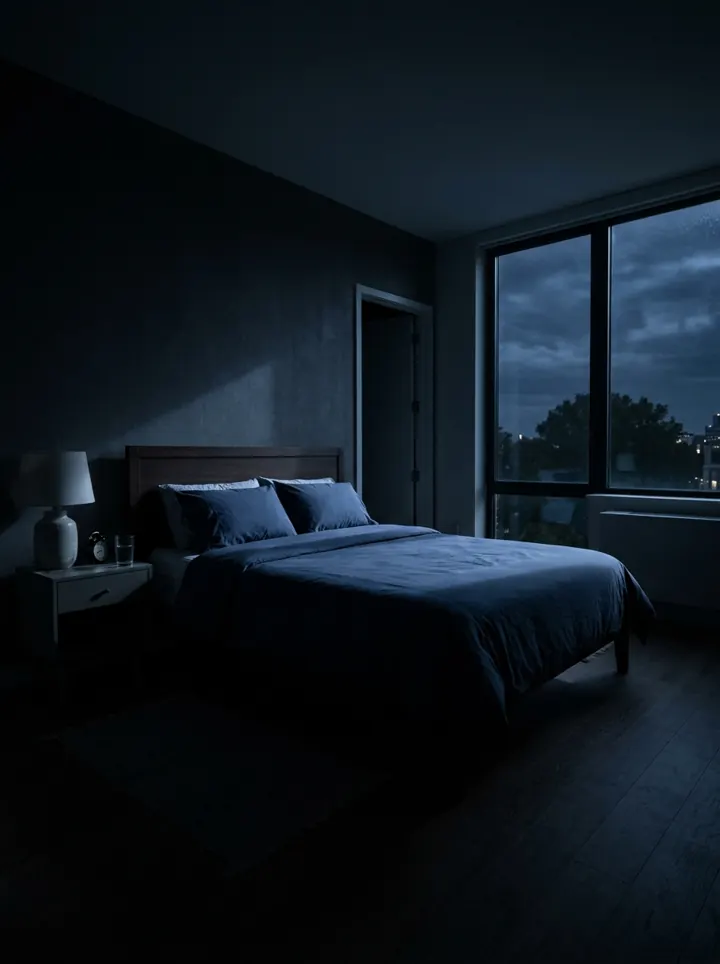
What really happens without sleep
The best-known record is Randy Gardner, a 17-year-old who stayed awake for 264 hours (about 11 days) in 1964 for a science fair. By the end he had trouble concentrating, memory lapses and hallucinations. Researchers no longer allow attempts like this because they're dangerous.
There's also a rare inherited disease, fatal familial insomnia, in which the brain gradually loses the ability to sleep. It shows how essential sleep is for humans.
Animals that cheat
Nature has found workarounds. Dolphins and some birds can sleep with one half of the brain at a time (unihemispheric sleep), so they can keep swimming or flying while resting. Even so, they still sleep. No known animal with a complex brain skips it entirely.
So, would you give it up? Extra decades sound amazing, but most of us would probably miss the one part of the day when nothing is expected of us.
FAQ
How much sleep do adults need?
Health organisations recommend at least 7 hours a night for adults. Individual needs vary, and most people need between 7 and 9 hours.
What is the longest anyone has stayed awake?
The best-documented case is Randy Gardner, who stayed awake for about 264 hours (11 days) in 1964, with significant cognitive problems by the end.
Why do we need sleep?
Sleep supports memory consolidation, waste clearance in the brain, immune function and hormone regulation, among other functions scientists are still studying.
Do any animals not sleep?
All animals with complex brains studied so far sleep in some form. Dolphins and some birds rest one brain hemisphere at a time.
Sources & further reading
- Watson, N. F. et al. (2015). Recommended amount of sleep for a healthy adult. American Academy of Sleep Medicine & Sleep Research Society. Sleep.
- Xie, L. et al. (2013). Sleep drives metabolite clearance from the adult brain. Science.
- Gulevich, G., Dement, W. & Johnson, L. (1966). Psychiatric and EEG observations on a case of prolonged (264 hours) wakefulness. Archives of General Psychiatry.
- US Foreign Service Institute: language learning timelines (Spanish, ~600–750 class hours).
- Rattenborg, N. C. et al. (2000). Behavioral, neurophysiological and evolutionary perspectives on unihemispheric sleep. Neuroscience & Biobehavioral Reviews.

This is a hypothetical scenario explained with real science. Numbers are rounded for clarity. Images are AI-generated illustrations of real phenomena. Spotted an error? Tell us and we'll fix it.